“Experiential Knowledge + Science + Art = Creative Ethnographic Drawing” by Susana de Noronha of the Centre for Social Studies - University of Coimbra, Portugal, has been announced as a keynote to be presented at The European Conference on Arts, Design & Education (ECADE2022), on-site and online from the University of Porto, Portugal.
To participate in ECADE2022 as an audience member, please register for the conference.
The presentation will also be available for IAFOR Members to view online. To find out more, please visit the IAFOR Membership page.
Abstract
Experiential Knowledge + Science + Art = Creative Ethnographic Drawing
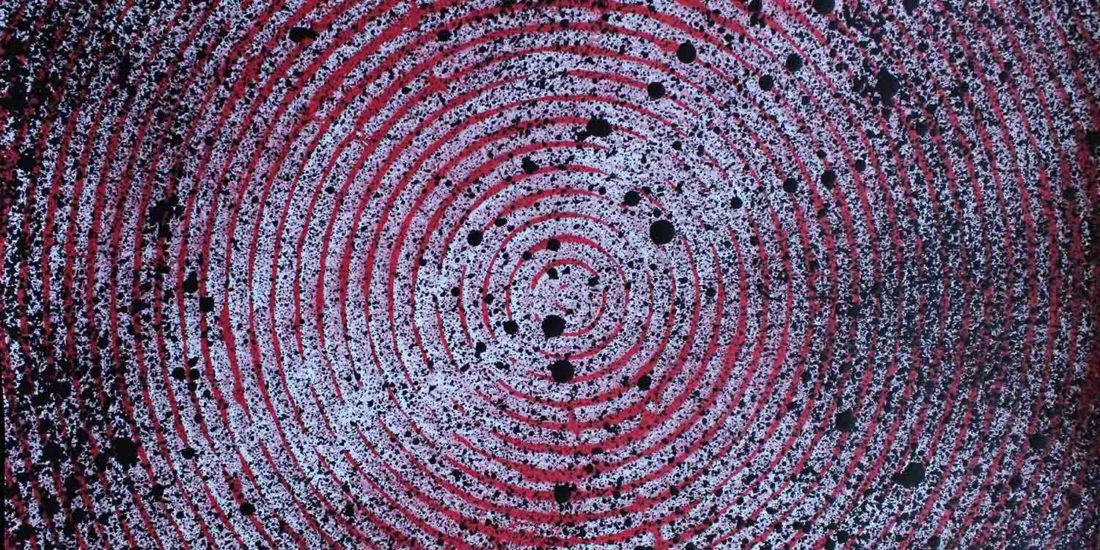
Can a new format of illustrated social science, combining text and image, using visual and creative methodologies, facilitate and reinforce the outcomes and impact of our research in matters of health and illness? This presentation describes the outline and the heuristic possibilities of a novel qualitative methodology – creative ethnographic drawing – a hybrid approach I’ve been developing for the past five years. This transdisciplinary methodology evolved from a postdoctoral anthropological investigation focusing on the stories of Portuguese women with diverse cancer experiences, analysing how illness, resistance and death were experienced and conceptualised. With a view to a reinforced understanding of cancer, it underlines the experiential knowledge of those who live and feel it, patients, survivors, and bereaved relatives, bringing to the discussion whatever was regarded as relevant from their point of view. Combining firsthand experience and social science, enhanced by art, this methodology integrates embodied reasoning, speech, and drawing in the core of the investigation, using them as methodological resources and forms of knowledge, using my interlocutors’ words and stories to create a meaningful sequence of images.
With the potential to democratise science, producing a more accessible, readable and visible form of knowledge, creative visual methodologies can also broaden the way social studies understand reality and take action, diversifying what we can say, show, and do. Refusing their accessory or secondary participation in science, I use the ontological, heuristic, epistemological, and performative resources offered by artistic and visual practices, considering them as possible extensions of experience, that is, a part of the way illness can be felt, understood, and managed. Linking medical anthropology to the possibilities of a hybridization of ethnography, art, and visual methods, I emphasise what we can find in that combination. Methodologically, however, the drawings and paintings go beyond what is conventionally understood as scientific illustration. By adding metaphor and imagination to the creative process, with the use of specific shapes and colours, I was able to materialise ideas and facts that otherwise would not be translatable into conventional realistic illustration, aiming to broaden and facilitate the reader’s and viewer’s comprehension.
Resulting from informal conversations, the drawings are understood as collaborative and co-authored creations, bearing the names or pseudonyms of my interlocutors, seeking a balance between writing and speaking, reaffirming the undivided roles of the researcher and the interviewees in their conceptual formulation.
Speaker Biography
Susana de Noronha
Centre for Social Studies - University of Coimbra, Portugal
 Susana de Noronha, Anthropologist and PhD in Sociology, is Researcher at the Centre for Social Studies (CES), University of Coimbra, Portugal, Secretary of CES General Assembly, and member of the Editorial Board of the CES/Almedina Book Series. Between 2020 and 01/2022, she was Co-coordinator of the Science, Economy and Society Research Group (NECES) at CES. She is also an Invited Assistant Professor at the Department of Sociology, University of Minho, Portugal, and has been an Invited Professor in the Network of Post-Graduate Programs of the Latin American Council of Social Sciences (CLACSO) since 2019. Currently, she is a team member of the International Project “Visibilizing Pain: Illness Visual Narratives and Storytelling Transmedia” (coordinated by the Universitat Internacional de Catalunya-UIC, Spain) and Ambassador for Portugal of the Association for the Study of Death and Society. She was distinguished by an international jury with the 2007 CES Award for Young Portuguese-speaking Social Scientists and winner of the 2003 Bernardino Machado Award for Anthropology by the University of Coimbra. Author of three research monographs: A Tinta, a Mariposa e a Metástase: a arte como experiência, conhecimento e acção sobre o cancro de mama (2009, Afrontamento) [Paint, Butterflies, and Metastases: art as experience, knowledge, and action on breast cancer]; Objetos Feitos de Cancro: mulheres, cultura material e doenças nas estórias da arte (2015, Almedina) [Objects Made of Cancer: material culture and illness on women’s art stories]; and Cancro Sobre Papel: Estórias de oito mulheres Portuguesas entre palavra falada, arte e ciência escrita (2019, Almedina) [Cancer on Paper: the stories of eight Portuguese women in words, art, and science]. As a writer and researcher, she is also a published lyricist and author of scientific illustrations, using photography, painting and creative ethnographic drawing.